Pilates is one of those things that looks “gentle” right up until your core starts shaking and you realize you’ve been cheating your posture for a decade.
Picking a studio in Geelong isn’t hard because there are no options. It’s hard because most studios look fine on Instagram, and the difference between “fine” and “fantastic for your body” is usually invisible until your third class… or your first flare-up.
Start here: what do you actually need?
Look, you don’t need a 12-tab spreadsheet. But you do need clarity on three basics: goal, constraints, and consistency.
If your goal is general strength and body awareness, you’ve got a wide runway. If it’s rehab, back pain, pelvic floor recovery, or hypermobility, your runway narrows fast, and your studio choice matters a lot more than the vibe in the waiting area—consider something like Upstate Studios in Geelong where instructors specialise in tailored programs.
Ask yourself:
– What do I want in 8, 12 weeks? (stronger core, less pain, better posture, athletic performance)
– What’s going on physically right now? old injuries, current pain, pregnancy/postpartum, joint issues
– How often can I realistically go? Twice a week beats “five times for two weeks then never again”
One-line truth: Progress in Pilates is less about the “perfect class” and more about repeatable practice.
A slightly technical detour: match the method to the goal
Pilates isn’t one monolith. Studios mix formats, equipment, and teaching philosophies, and the mix changes the outcome.
Mat Pilates
Great for foundational control and learning your body. Also easier to scale at home. Harder than people expect (no, really).
Reformer Pilates
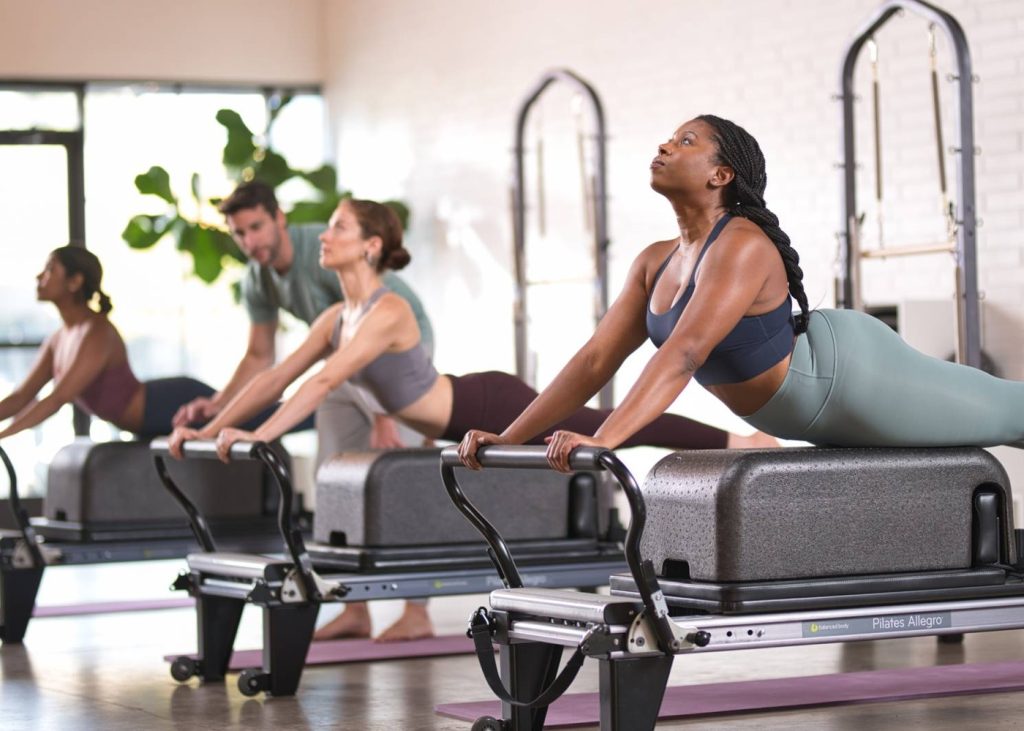
More feedback, more options for progressive resistance, often more accessible for beginners because the carriage supports movement patterns, if the instructor knows what they’re doing.
Clinical / rehab-informed Pilates
Usually smaller class sizes or 1:1. More assessment, more cueing, more modifications. Often less “sweaty,” more effective for pain and movement retraining.
Now, this won’t apply to everyone, but if you’re managing an injury or chronic pain, I’ve seen too many people get stuck doing random reformer flows that feel great for a week and then quietly aggravate something.
Hot take: if the studio won’t modify, walk out
A good Pilates studio isn’t defined by candles and playlists. It’s defined by how safely it can handle real humans: beginners, stiff people, anxious people, sore backs, athletes who think they’re invincible.
When you walk in, scan for these “quiet signals”:
Cleanliness is obvious. Flow and layout is less obvious. Are reformers spaced so you can extend arms/legs without clipping the person next to you? Are props organized or dumped in a corner like an afterthought?
Equipment tells a story too. Reformers should glide smoothly and straps should look maintained, not frayed. Springs should feel consistent, not like one side is secretly stronger (yes, it happens).
And the atmosphere? Calm beats performative.
What to look for in instructors (friend version)
Here’s the thing: you’re not hiring a cheerleader. You’re hiring someone to teach movement.
The best instructors I’ve trained under did three things exceptionally well:
- Clear cues that land fast (“ribcage down” is useless if they can’t explain how)
- Smart regressions and progressions so everyone is working at the right intensity
- Respectful corrections with consent for hands-on adjustments (and alternatives if you prefer verbal-only)
If you leave a class confused, that’s data. If you leave a class feeling challenged and more organized in your body, that’s gold.
Questions that expose the truth fast
You can ask these at reception, via email, or right after a trial class. A studio that’s solid won’t get defensive.
Instructor + safety
– What certifications do your instructors hold, and do any have rehab or clinical backgrounds?
– How do you handle common issues: lower back pain, shoulder impingement, hip pain?
– Do you offer modifications in group classes, or is that only in privates?
Class structure
– What’s the typical class size on reformer?
– Do you level classes properly, or is “all levels” doing a lot of heavy lifting?
– Do instructors follow a programmed progression or just freestyle sessions?
Logistics that affect consistency
– What’s the cancellation policy?
– Are intro offers available, and do they include an assessment?
– Can I stick with one instructor, or is it a rotating roster?
(If they can’t answer clearly, that’s usually your answer.)
A real stat, because marketing gets loud
Pilates has research behind it, especially for pain and function. A 2015 systematic review in PLOS ONE reported Pilates can improve chronic low back pain outcomes compared with minimal intervention, with benefits seen in pain and disability measures. Source: Yamato et al., PLOS ONE (2015).
That doesn’t mean every class in every studio will help your back. It means good Pilates, taught well, tends to be a smart bet.
Test-driving studios in Geelong (the part people rush)
Book a trial class. Actually, book two at the same place if you can, one class can be an anomaly: different instructor, weird playlist, you slept badly, Mercury in retrograde, whatever.
During the class, watch for:
- A) Cue quality
Do they cue breath, rib position, pelvis, scapulae, and load management in a way that makes sense? Or is it just “pulse, pulse, pulse”?
- B) Modification culture
Do they offer options without making anyone feel singled out? The best studios normalize it: “If your back doesn’t love this, take option B.”
- C) Progression
Is there a reason behind the sequence? Or is it random “spicy” moves stitched together?
- D) After-effects
Not soreness, that’s cheap. Do you feel taller, more stable, more aware? That’s the Pilates effect you want.
One-line check-in: You should leave feeling better organized, not merely exhausted.
Practical filters: schedule, parking, and pricing (yes, it matters)
A studio can be brilliant, but if the only classes you can attend are at 6:00am on Tuesdays, you won’t go.
So get blunt with your logistics:
– How long is the commute with real traffic?
– Is parking easy near the studio, especially at peak times?
– Are class packs priced so you can attend at the frequency you need?
– Do they have a clear pathway from beginner to intermediate (or do you plateau)?
Transparent pricing is a green flag. Confusing packages and vague “membership benefits” tend to hide constraints.
Build a plan that doesn’t collapse in week three
If you want something that works in real life, aim for 2, 3 sessions per week. Two is enough to change your body if the programming is coherent. Three is great if you recover well and your schedule doesn’t become a stressor.
A simple rhythm I’ve seen work repeatedly:
– 1 class focused on fundamentals and control (slower, precise)
– 1 class with more load/flow (reformer can shine here)
– Optional third session as technique, mobility, or a private if you’re rehabbing something specific
Keep a tiny notes log on your phone (seriously, 20 seconds):
– what felt great
– what felt sketchy
– what you want more of next time
That’s how you choose a studio like an adult instead of like a shopper.
Final thought (not a pep talk)
The “right” Pilates studio in Geelong is the one you’ll attend consistently and the one that keeps your body improving instead of just surviving sessions. Sometimes that’s the fancy boutique. Sometimes it’s the quieter place with the instructor who watches like a hawk and explains one cue that changes everything.
And yes, the best fit can surprise you.